


The earring glossary
EAR-CYCLOPEDIA
Back to articles
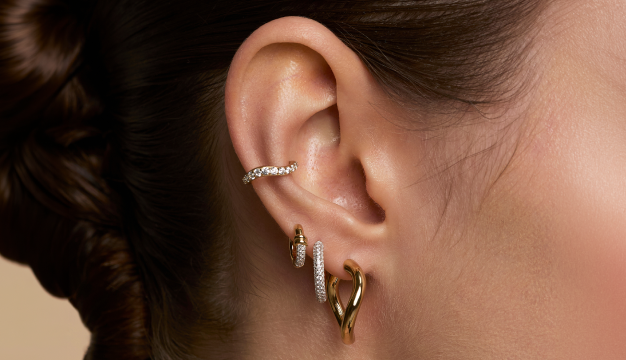
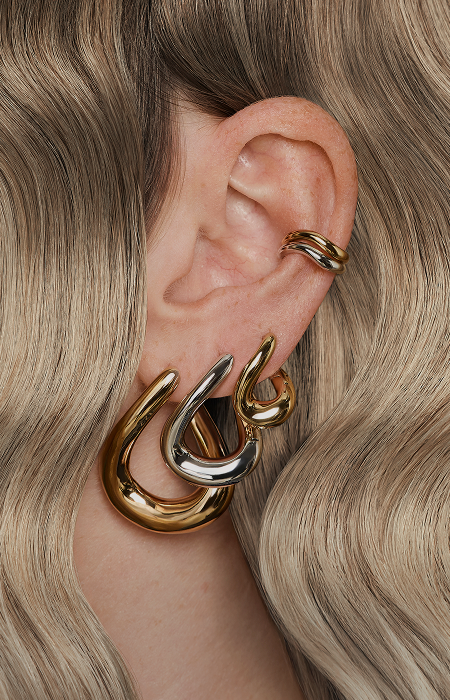
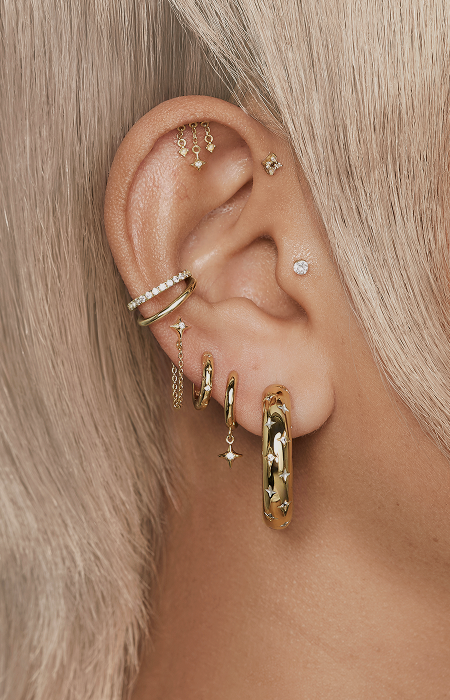
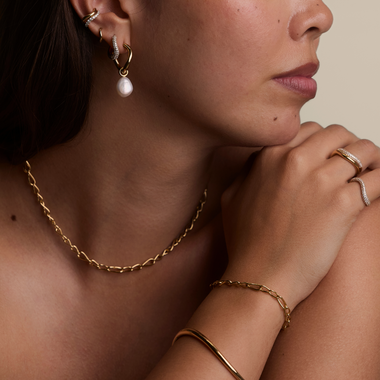
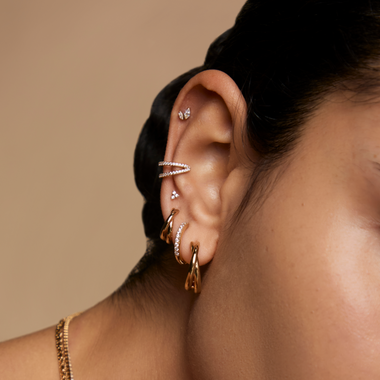
The “curated ear” is an aspirational jewellery milestone, when your earring collection and piercing placements align to create your own personal, perfected ear stacking style, which can be switched up to match any occasion.
But with so many looks to choose from, and new earring terms being thrown around, sometimes it's confusing to know where to start. So let’s jump back to basics for a moment and brush up on the various types of earrings you can style your stack with, and the common earring terms jewellery brands are now using.
Knowing your ear cuffs from your climbers, your hoops from your huggies, is the first step towards defining your very own curated ear stacking style.
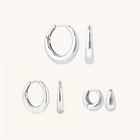
1. Hoops
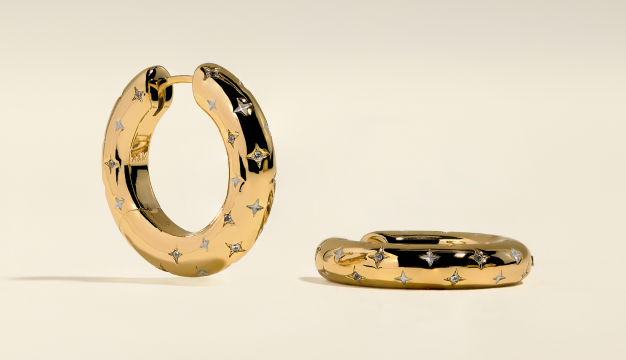
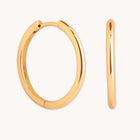
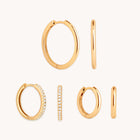
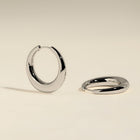
Where it all began - the hoop earring. Both classic and timeless, hoops are perfect for any occasion. Medium to large hoops can become the centre of your stack - a statement piece to take your look from day to night. Whereas small simple hoops can be stacked alongside each other for a subtle yet edgy look.




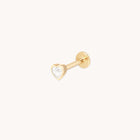
2. STUDS
Studs are a great way to start your stack if you’re going for an elegant, understated look. They’re also a great way of adding cute accompaniments to a larger, more statement earring. They're the perfect way to add everyday sparkle to your stack, when you want your outfit to do the talking.


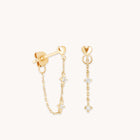
3. HUGGIES - What is a Huggie Earring?
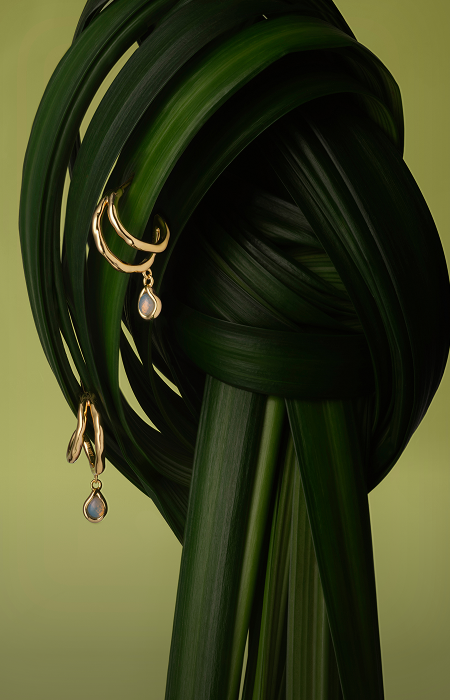
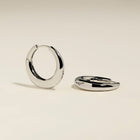
Huggies are a style of little hoop earrings that ‘hug’ the earlobe - this means they sit close to your earlobe. They tend to have a lever back, meaning the curved back of the earring simply clicks into place. Astrid & Miyu’s huggies come in a wide range of designs. Whether they’re simply silver or gold plated huggies, or more intricately designed with stones, jewels, or dainty charms, huggies look beautiful worn alone, or as a part of your stack.

What piercings can I wear a huggie in?
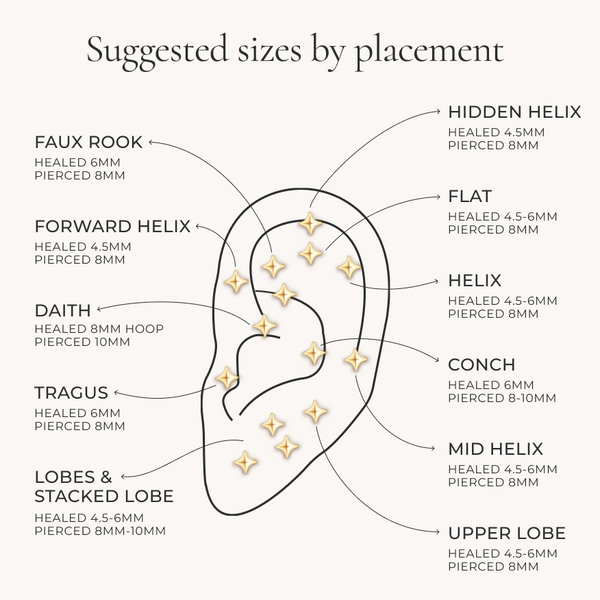
Because of the huggie’s small diameter, they tend to be used for lobe piercings, however they can be used for other piercings such as the helix (cartilage at the top of the ear), forward helix (top, front of the ear) and the tragus (in front of the ear canal). Stack and style your huggies the way you want!

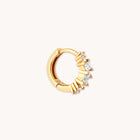
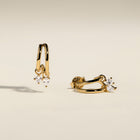

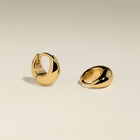
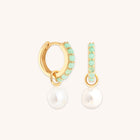
4. PIERCING HOOPS - What are piercing hoop earrings?
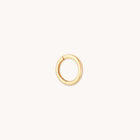
Piercing hoops are small hoop-style earrings designed for healed cartilage piercings. They come in a range of metals, styles and diameters so you can get the right fit for your piercing.

.jpg?v=1785234472143&options=w_1200)
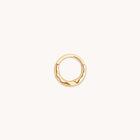
5. EAR CUFFS - What are ear cuffs?
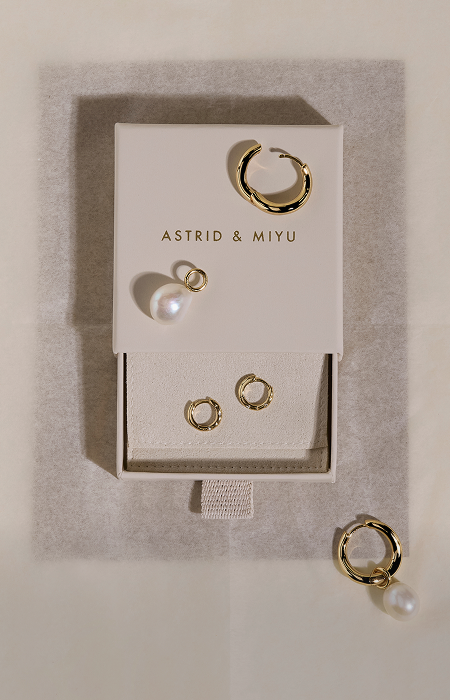
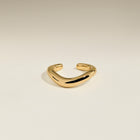
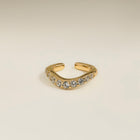
An ear cuff is a 3/4 ring that can be slipped over the side of the ear and stays in place by pressing together tightly on the ear. Ear cuffs do not require a piercing and this is one of the many reasons they are so popular. All our ear cuffs are designed to fit onto either your left or right ear, so you are free to decide and change it up as you go.



How To Stack
Ear stacking is all about experimenting. Playing with different platings, colours, textures and sizes. Whether you have no piercings or ten, the stacking choices are endless.
Our top tips:
- Start by choosing one earring to be the focal point of the ear - whether its a statement earring, ear cuff or a jewelled helix stud.
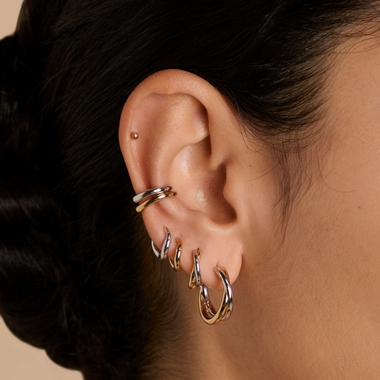
- Build around that with earrings of different sizes - most people choose to wear their largest pierce in their 1st lobe and graduate down from there.
- Don’t be afraid of asymmetry - play with a hoop in one ear and a stud in the other.
- Mix and match silver and gold - there are no rules in this game.
Have you tried our Stack Curator?
The Stack Curator let's you try out a new look, without the commitment. Simply select the piercing placement or jewellery you’d like to explore and see what it looks like with the rest of your stack. Then, once you’re happy with your new look, add to basket or book in for a piercing appointment to make it a reality.

YOUR EARRING FAQS, ANSWERED
What earrings are best for sensitive ears?
There are four different metals that are usually suggested for sensitive ears. Sterling Silver, 14k Gold, Titanium and Platinum. The most common candidate to cause an allergic reaction is nickel. By avoiding nickel, your sensitive ears should stay allergy free. Always check what earrings are made of before purchase. At Astrid and Miyu, we are dedicated to making sure all our jewellery is nickel free, therefore should cause no reaction.
What earrings can you sleep in?
Technically you can sleep in any earrings, though some of them won’t be as comfortable as others. Plated earrings will also rub away the more you wear them, so we would suggest keeping them in an airtight box overnight rather than wearing them to bed.
What earrings suit me?
Different shapes and sizes suit different face shapes, so it is best to experiment and find out what you like. Check out Astrid & Miyu’s face shape guide to help get you started!
How many earrings are too many?
It all comes down to personal preference and style! At Astrid and Miyu, we say the more the better, so stack away! Create earring combinations no one else has!
Can I wear sterling silver earrings in the shower?
Yes, you can wear Sterling Silver earrings in the shower. However, water does cause silver to oxidise (darken) more quickly.
What are constellation earrings?
Constellation earrings are a cluster of earrings, either on your lobes or cartilage, that are placed around the same way stars and planets appear in the night sky. Style with our star and moon charm earrings from our mystic dreams collection for an out-of-this-world look.
What is the most painful ear piercing?
Pain is all dependant on the person and their pain threshold. Some people think that a rook piercing is the most painful, while others aren't phased by it at all. Chat to our expert piercers about what you’re looking for and how you usually react to pain and they will be able to give you a better understanding of the ear piercing process that will suit you.
What kind of earrings do you use for a helix piercing?
For the helix piercing, which is located on the upper cartilage of your ear, both a stud and hoop can be used to pierce with. We would advise to pierce with a stud initially, as this can cause less irritation than a hoop (a hoop can catch on things and rotate). Top tip: Studs usually allow for a piercing to heal quicker!
Similar Articles
Necklace Layering Lookbook
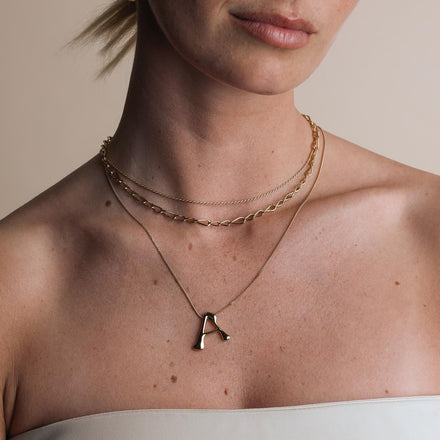
While one necklace is nice, at A&M we're all about necklace layering. Find out how to achieve the necklace stack of your dreams.
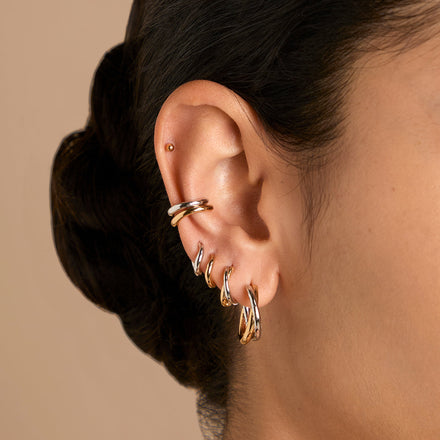
The Mixed Metals Guide
Is it okay to wear mixed metals? The simple answer: yes! The idea that everyone should wear the same plating jewellery is a total myth.

The Ring Stacking Guide
Ever wanted to know how to achieve the perfect ring stack? In this guide, we offer up our favourite tips & tricks for every style.
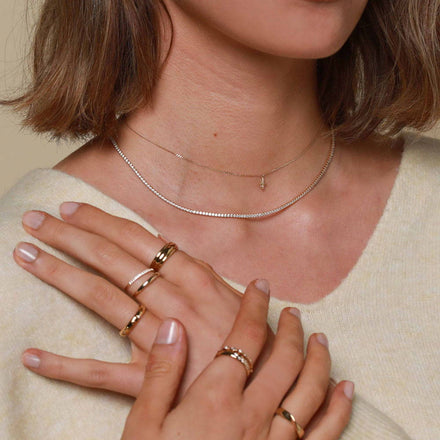
Solid Gold Jewellery
Whether it’s for a special occasion, to celebrate someone special in your life or for you to wear everyday - our solid gold pieces are made to be treasured.